People usually book a first aid course after something has actually drunk them. A scare with a child. A coworker collapsing at the office. A story on the information that is a little also easy to envision at home or in the office.
Then reality obstructs. Job, youngsters, travelling, rosters. The idea of spending a complete day or two in a classroom for first aid training silently drops down the list.
That space in between great objectives and sensible truth is exactly where fast first aid courses, express first aid training, and fast CPR courses have actually expanded. Succeeded, they offer individuals the vital skills to act in an emergency situation, in a portion of the time of standard programs. Done badly, they create an incorrect feeling of confidence without sufficient depth.
The difference in between the two is not good luck. It is design.
What "fast" in fact suggests in first aid and CPR training
When individuals look for a "fast first aid course near me" or "express cpr course", they usually have three constraints: time, ease, and a demand for a legitimate first aid certificate. Providers react with styles that press face-to-face time without reducing the required content.
Fast first aid training commonly achieves this in one or more methods:
Pre course online finding out that covers theory. Shorter, focused in‑person sessions for practical skills. Smarter scheduling, such as nights, weekends, or split sessions. Streamlined evaluation systems that avoid downtime in class.A criterion first aid and CPR course that when took a full day or even more can frequently be finished in a half day on site, with 2 to 4 hours of on-line work done in advance. Express first aid courses press also harder on that version, aiming to obtain participants assessed and accredited in the fastest practical timeframe.
From a regulatory point of view, this is acceptable as long as:
- total knowing and method time still fulfills the expertise requirements assessments are robust practical components, like chest compressions or bandaging, are completed face to face and observed
Where shortcuts slip in is when service providers attempt to reduce not just seat time yet general understanding time. That is when speed quits serving safety.
Why rate issues, and when it does not
Over the years I have actually educated office workers, childcare team, lifeguards, building teams, and moms and dads. Various teams really feel the pressure of time in various ways.
A child care centre trying to roster a whole group through an express child care first aid course can not merely close for a day. Turning personnel through a fast first aid course that works on a weekend break or evening makes the distinction in between conformity and consistent stress.
Similarly, a company with change employees might discover it far easier to schedule brief express cpr training sessions back‑to‑back, instead of one lengthy course that encounter production schedules.
Speed matters in at the very least 3 sensible ways.
First, it reduces the barrier to access. Somebody is more likely to finish first aid and cpr training classes that match half a day of leave, as opposed to a complete day plus travel.
Second, it supports organisations with high turnover. Hospitality, retail, and some healthcare functions have continuous personnel modifications. Fast certification layouts allow brand-new team make a first aid certificate or complete a fast cpr correspondence course without waiting months for a full‑day program.
Third, much faster courses are commonly a lot more focused. With theory took care of online, class time can be nearly entirely hands‑on: CPR training on manikins, exercising recuperation settings, taking care of choking, and practicing scenarios like seizures or major bleeding.
Where speed does not issue is in the knowing procedure of the human remaining in front of you. The heart of first aid training is not the slide deck or the ticking of a conformity box, it is obtaining somebody to the point where they can conquer adrenaline, remember the actions, and devote to acting.
That takes repeating, discussion, and a chance to make blunders in a risk-free atmosphere. The very best fast first aid courses design for that, instead of ignoring it.
How fast first aid courses are structured
Different companies package points differently, but most fast first aid course layouts share a few features.
Usually, an enrollee receives on the internet access to pre‑course products. This might be a mix of analysis, brief videos, and quiz questions. For a combined first aid and cpr course, that on-line element often covers:
- basic anatomy and physiology the DRSABCD or comparable initial reaction framework recognising life‑threatening problems, such as anaphylaxis, cardiac arrest, stroke, and serious bleeding legal and honest issues: approval, document keeping, workplace reporting
The express first aid training session itself focuses on efficiency:
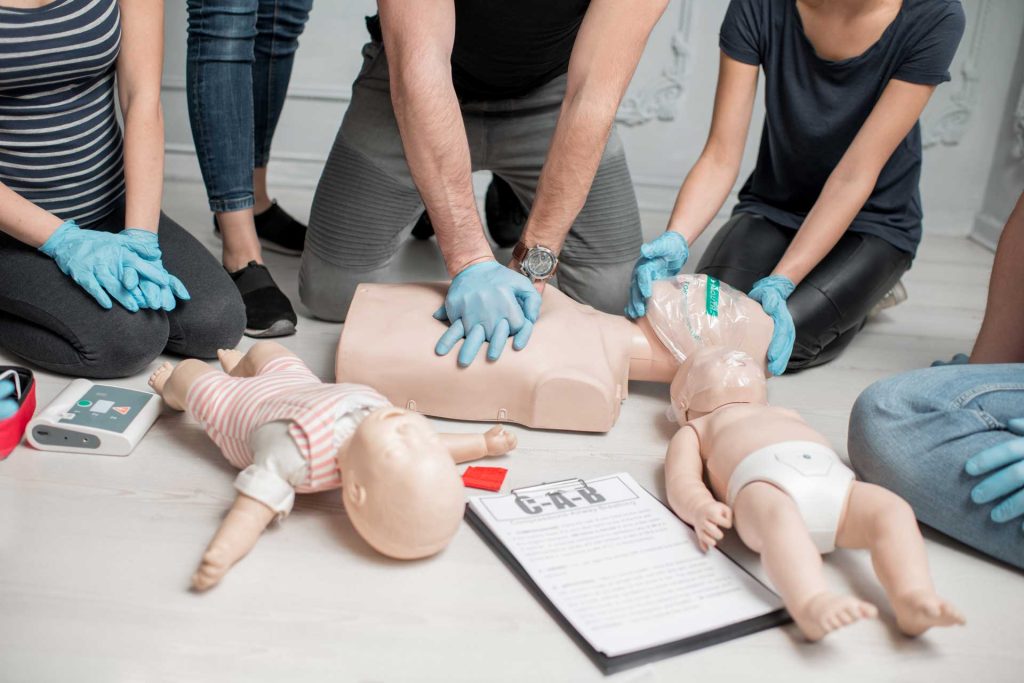
You will certainly kneel on the flooring and carry out upper body compressions. You will certainly switch duties with a partner to practice rescue breathing. You will imitate circumstances for bronchial asthma strikes, allergic reactions using placebo auto‑injectors, and spinal precautions.
In express child care first aid training, there is an additional concentrate on baby and youngster CPR, choking in kids, febrile convulsions, and childcare‑specific reporting requirements. An express child care first aid course needs to straighten with local policies for early childhood years solutions, so it typically really feels even more detailed than a general first aid course even in a fast format.
Assessments throughout a fast first aid course or fast cpr course generally include:
- observed CPR on adult and infant manikins for a minimal variety of compressions correct use of an automatic external defibrillator (AED) demonstration of bandaging, slings, and pressure techniques scenario based issue fixing under time pressure
If the course is genuinely "express" in seat time, you need to anticipate that the on the internet job is not optional. Avoiding it and hoping to coast with on the day is a recipe for frustration.
The actual benefits: more than simply saving time
Time savings are evident, yet the deeper benefits of well‑designed fast first aid courses appear later on, on quieter days.
One of the greatest advantages is repetition over a longer arc. When an organisation makes use of much shorter fast first aid training blocks and fast cpr correspondence course, they can set up updates a lot more regularly. Abilities like CPR degeneration remarkably promptly; research studies recommend that chest compression depth and rate degrade within a few months without practice.
With normal, short refreshers, staff see the material more often, also if each direct exposure is short. An office that runs a complete first aid and cpr course once every 3 years usually creates people who remember "something concerning 30 compressions" however wait on the information. A workplace that uses yearly express cpr courses or a fast cpr correspondence course commonly creates responders who feel extra confident with the sequence.
Another benefit is mental: availability signals top priority. When a business buys a fast first aid course that is simple to attend, they send out a message that first aid is part of typical operations, not an extra concern. Individuals are more probable to offer when they see associates relocating with fast first aid courses without it thwarting their week.
There is also a price angle. Shorter on‑site hours can imply lower place expenses, much less time far from core tasks, and easier rostering. That does not immediately validate a program, yet it typically makes the distinction between running first aid and cpr training classes inside and outsourcing them irregularly.
For individuals, a fast first aid course provides a workable means to obtain or restore a first aid certificate when life is crowded. A parent, carer, or pupil may simply never ever book a two‑day course, yet will gladly dedicate to an evening express first aid course if it is nearby.
Where fast layouts can fall short
I have actually seen fast first aid courses that left individuals energised and qualified, and others that left them gazing blankly when asked to recall basic actions by the end of the day. The surface product packaging can look identical. The difference is generally in how companies discuss the trade‑off in between speed and depth.
Here are the primary failing factors I see when speed is pushed too difficult:
- Overloading the online element with thick, text‑heavy theory, then hurrying sensible job since everybody is tired. Allowing individuals to avoid or skim the pre‑course demands, transforming the class right into an uphill struggle for both fitness instructor and learner. Reducing circumstance practice to a fast demonstration instead of letting people talk with what they notice, what frightens them, and how they could respond. Treating analysis as a tick‑and‑flick workout as opposed to an opportunity to remedy method and installed habits. Ignoring different learning styles. Some individuals soak up procedures well with analysis, others need to chat and move. A simply on the internet fast first aid course that offers no in‑person technique is generally inadequate for novices; it may work only as a theory refresher, and also then with limits.
Fast formats amplify poor training. In a long course with an unskilled fitness instructor or a dull script, there is still time to recuperate. In a pressed express first aid course, there is a lot less area to repair misunderstandings.
If you ever before leave of fast first aid or fast cpr training sensation a lot more baffled than when you walked in, that course has actually failed you.
Matching course kind to your real‑world risks
For a white-collar worker who primarily experiences paper cuts, a basic first aid and cpr course with a fast shipment layout may be more than enough. For a childcare teacher, a straightforward fast first aid course targeted at workplaces in general could miss out on important topics such as bronchial asthma management strategies, head injuries in toddlers, and guidance during outside play.
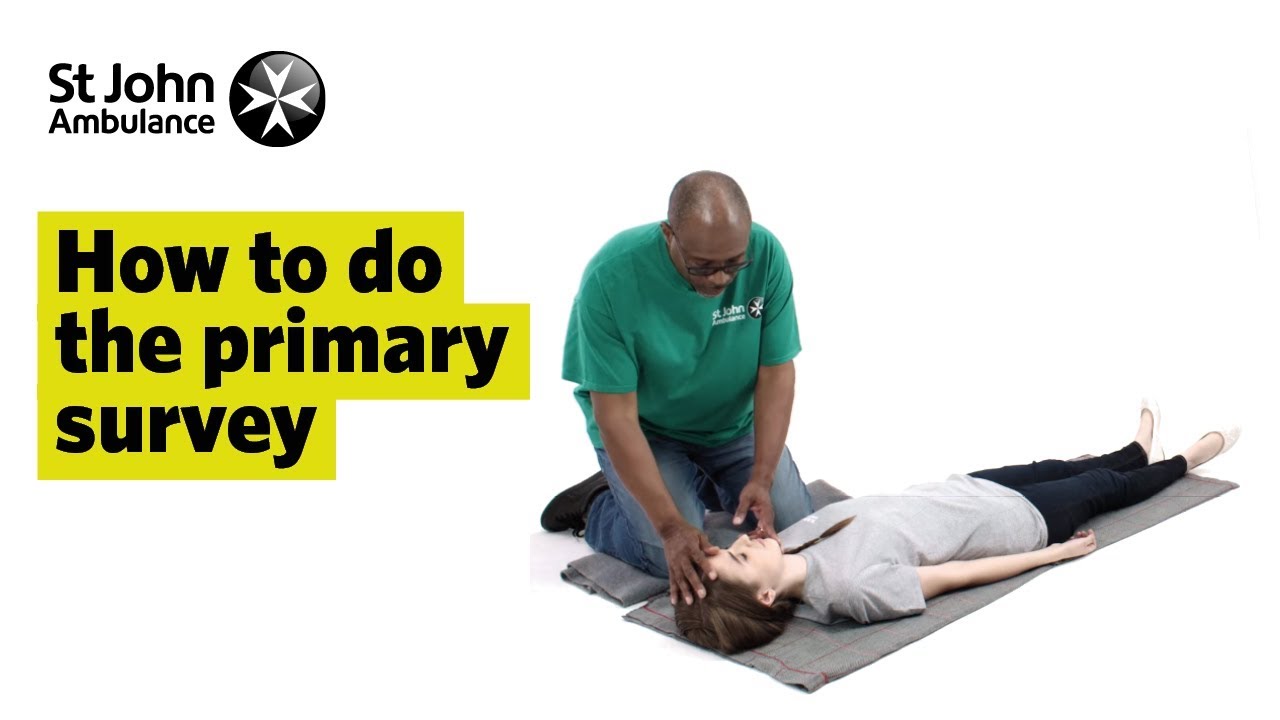
The right layout relies on your setting and responsibilities.
An express child care first aid course makes good sense wherever you are accountable for babies and young children: very early knowing centres, after‑school care, holiday treatment, neighborhood playgroups, and even huge household day care settings. Express childcare first aid courses generally spend even more time on allergic reactions, choking in youngsters, and child‑specific CPR proportions, and they integrate paperwork demands from childcare regulations.
For health and wellness experts, such as individual instructors or sports coaches, fast cpr courses emphasising cardiac events, exertion‑related collapse, and quick AED usage are often critical. Some service providers integrate these into sports‑focused first aid courses, once more using a fast style that allows a whole team or training team train together.
In higher‑risk work environments like building or manufacturing, a fast first aid course can still work, but only if it recognizes particular hazards: crush injuries, electric incidents, drops from height. A generic low‑risk course delivered swiftly will not prepare employees for the injuries they are really most likely to see.
When you look at a company's description, check that the web content is not just "first aid and cpr" as a whole, however especially relevant to your world.
What to search for in a fast first aid provider
Even individuals that work in safety duties confess that first aid training quality varies extensively. 2 "express first aid courses" can wear the exact same label and supply extremely various outcomes.
When you are selecting between programs, a short list can assist:
- Accreditation and recognition: Is the service provider identified by the relevant authority in your region, and will the first aid certificate stand for your sector or regulative body? Delivery mix: Does the course clearly discuss how much time is on the internet, how much is in individual, and what is evaluated in person (particularly for CPR training)? Trainer experience: Can you see info regarding that actually teaches the first aid and cpr course, not simply the organisation's name? Group dimension: How many participants per trainer in practical sessions, and the amount of manikins are offered? Crowded rooms waste your time. Post course assistance: Exist choices for a fast cpr refresher course or quick practice sessions between official renewals?
If you are reserving a fast first aid course near you for a group, ask direct concerns. How long on the flooring for CPR? The amount of scenarios? What happens if someone fights with the compressions or feels literally unable to do them at the standard depth? A severe carrier solutions without defensiveness.
Making fast training stick: what students can do
Fast first aid courses placed much more duty on learners to prepare and evaluate. The advantage is that you have more control over how much you leave the program.
Treat the online pre‑course job as component of the training, not an optional added. If the company approximates three hours, spread it throughout a couple of evenings. Remember in your very own words. Stop briefly the video clips and picture yourself doing the steps.
During the face‑to‑face component, withstand the urge to hang back politely. Volunteer to go first in circumstances, also if you feel awkward. Ask the awkward concerns about things that fret you, such as "What if I break a rib during CPR?" or "What if a parent declines help for their child?".
After you receive your first aid certificate, routine your very own technique. You may not have manikins in your home, however you can chat via circumstances Extra resources with family members or colleagues. Settle on that calls for aid, who fetches the first aid set, who fulfills the ambulance. In a child care setup, some centres integrate brief role‑plays into personnel meetings, turning express child care first aid training from a once‑a‑year event right into a continuous habit.
If your office offers express cpr courses or brief refreshers in between formal renewals, treat them as non‑negotiable. Ten mins of compressions on a manikin every few months will certainly maintain your technique much sharper than a single, heroic ruptured of method every 3 years.

When longer courses are still worth it
Speed is attractive, however it is not always the appropriate selection. Some scenarios require more immersion, more reflection, and more feedback than an express course can realistically provide.
If you are entering a marked first aid police officer duty in a high‑risk office, or you are brand new to any sort of wellness or safety and security training, a full‑day or multi‑day first aid and cpr course can provide even more breathing time. People that are anxious, quickly overwhelmed, or who have language barriers often benefit from a slower speed with more time for questions.
Advanced programs such as fap first aid (or equal sophisticated workplace action courses) usually can not be lowered to a short express layout without shedding important deepness. These courses cover prolonged evaluation, oxygen treatment, advanced air passage management, and in some cases remote or wild situations. They presume a baseline of experience that a fast first aid course for novices can not provide.
There is likewise a cultural aspect. In some groups, investing a complete day with each other on first aid training comes to be a shared experience that constructs trust. They talk extra freely about exactly how they react under stress and anxiety, that is likely to freeze, and just how they can sustain each various other. A string of fast first aid courses for scattered individuals might not produce that exact same bond.
The secret is not to praise rate but to match the course format to the responsibilities, dangers, and people involved.
The future of fast first aid and CPR training
Over the last years, first aid and cpr training classes have actually moved progressively toward blended discovering: online concept plus face‑to‑face useful job. That pattern will proceed, and fast first aid courses sit at the sharp end of it.
New systems can videotape compression deepness and price Brisbane first aid training extra precisely. Circumstances can be substitute with more realistic look. Some carriers currently utilize brief video refresher courses linked to your original express first aid course, pushing you to evaluate key actions at established intervals.
The question for organisations and individuals is not whether this change is excellent or negative in the abstract. It is whether the specific fast first aid courses and fast cpr courses they choose uphold the core purpose: making even more individuals ready and willing to act when an unfamiliar person stops breathing, a colleague collapses, or a child chokes.
If speed offers that objective, it is a gift. If it weakens it, it is a responsibility covered in convenience.
Bringing speed and safety and security together
On a useful degree, the most reliable programs I see share a few attributes, despite just how they are branded:
They respect time without claiming knowing is instant. They make use of on the internet components for history, after that shield in‑person time for technique, improvement, and concerns. They structure express first aid courses to ensure that also in a short session, people get their hands on the tools and walk through reasonable events.
They straighten fast first aid training with the specific globe of the learner: an express childcare first aid course for teachers, a small work environment first aid and cpr course for office teams, or concentrated fast cpr training for health and fitness specialists and safety and security staff.
They deal with the first aid certificate not as a finish line however as a checkpoint. There is a plan for refreshers, whether that is a yearly fast cpr refresher course, brief tool kit talks, or casual method in team meetings.
Most notably, they always remember that in the long run, a fast first aid course is only successful if, at 3am in a silent house or on a busy Monday early morning in a storage facility, a single person really feels just certain sufficient to progression, kneel beside someone in problem, and begin.